The Floor
WISE Scores Four Paired Action-Future Candidates for Robot Control
WISE ranks paired robot-action and imagined-future candidates using action validity, agreement between the action and predicted motion, and estimated task progress. In tests on RoboLab and LIBERO, the preprint reports higher average success than single-rollout execution, with increased runtime.
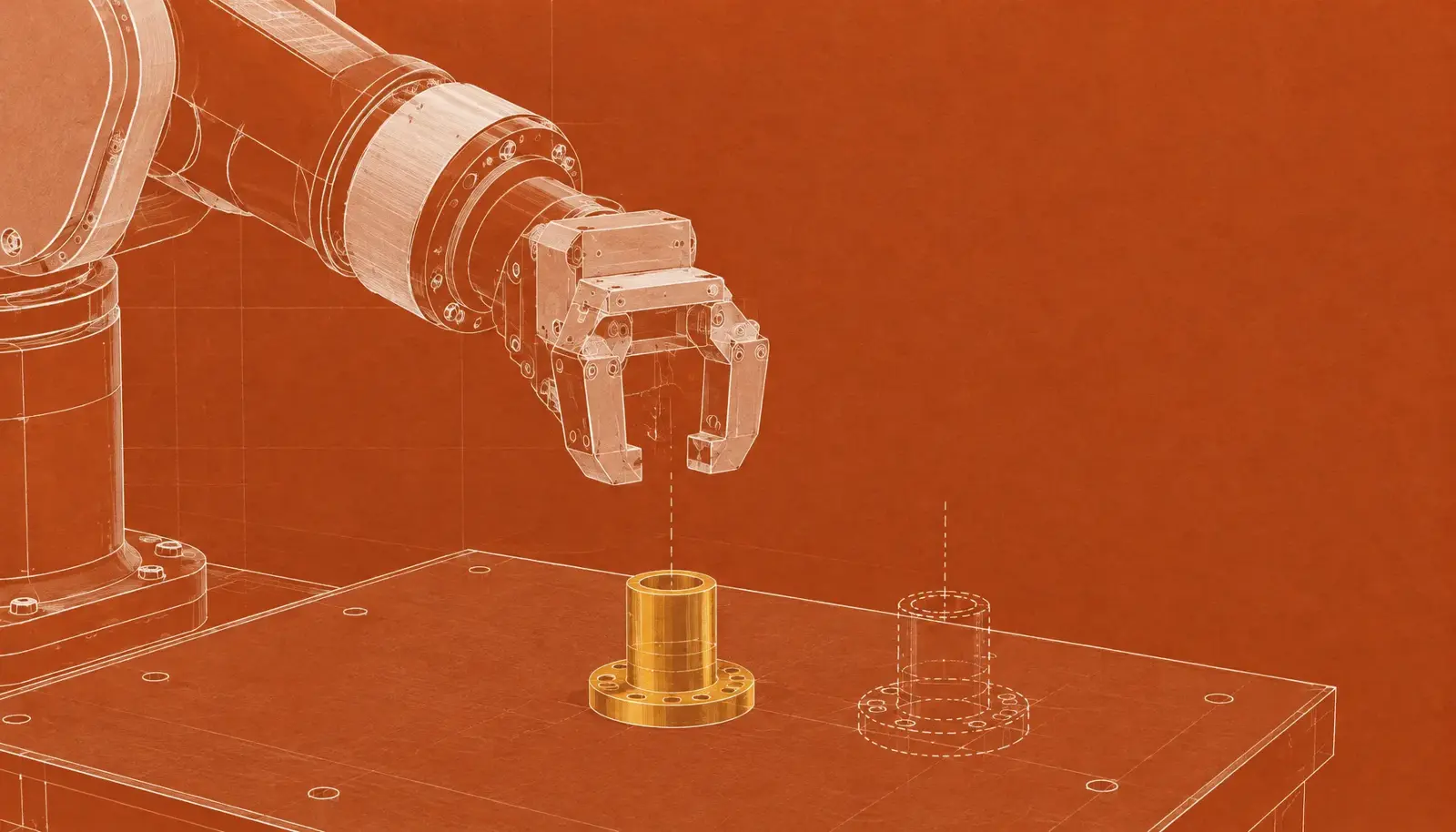
A preprint titled “Seeing Through the Illusion: Test-Time Scaling for World Action Models” introduces WISE, a selector for world action models that generate robot actions alongside imagined futures. Before execution, WISE scores four paired action–future candidates and selects the highest-scoring one. The arXiv page lists version 1 as dated 02 Nov 2026.
Scoring paired candidates
World action models produce both actions and predictions of how the observed world may change. A plausible-looking imagined future does not guarantee that its paired action will bring about the predicted motion. WISE evaluates each pair before execution and keeps the underlying world action model frozen.
“The central challenge is therefore how to judge a coupled action-future proposal using only information available before physical execution,” the authors write.
WISE combines three scores, each bounded between zero and one. The action score checks whether a proposed action chunk meets the applicable control-interface constraints and whether its commands imply plausible motion. Depending on the control representation, those checks can include command ranges and implied velocity, acceleration and jerk. The paper describes temporal regularity of the commands, not regularity of their timing.
A second score compares the proposed action with motion inferred from the candidate’s imagined future. An inverse dynamics model, trained for the relevant robot embodiment, predicts actions from the imagined frames. WISE measures agreement between those predictions and the candidate’s proposed continuous actions and discrete controls. The third score estimates how much progress toward the instruction the imagined future represents. WISE adds the three scores and executes the action chunk belonging to the top-ranked candidate.
Results on RoboLab and LIBERO
The preprint evaluates WISE with Cosmos 3 Edge on RoboLab and DreamZero on LIBERO. The comparison methods use four candidates per decision, as does WISE; direct execution of a single sampled rollout uses one. The world action models remain frozen during evaluation. Once a selected action chunk has been executed, the system replans from the next observation.
On RoboLab, the evaluation covers 10 manipulation tasks and 50 closed-loop episodes. Success rises from 6.0% with single-rollout execution to 24.0% with WISE. At the same four-candidate budget, Future Consensus reaches 18.0%, while GeoBoN and Robometer each reach 20.0%.
On LIBERO, the evaluation covers the Spatial, Object, Goal and Long suites, with 500 episodes per suite and 2,000 per method overall. Mean success rises from 75.1% for DreamZero with single-rollout execution to 78.3% with WISE. WISE’s largest gains over that baseline are 4.8 percentage points on LIBERO-Object and 3.2 points on LIBERO-Spatial. It is not the top selector in every suite: GeoBoN leads on LIBERO-Goal, and Robometer leads on LIBERO-Long. Across the benchmark’s aggregate results, WISE is 0.9 points ahead of Robometer.
The added selection comes with higher reported episode runtime than single-rollout execution: 3.4 times as high on RoboLab and 3.5 times as high on LIBERO. Among the four-candidate selectors, WISE has the highest runtime on RoboLab; on LIBERO, its runtime is comparable to Robometer’s and lower than GeoBoN’s.
Sources
- Original source · Preprint arXiv arXiv:2611.03585
Related stories
- FRED Lifts Human-to-Robot Skill Transfer to 50%
- Rhoda AI Reports Higher Robot Benchmark Scores With Larger Video Models
- Preprint Presents PHIL for Proactive Robot Policy Correction
- RoboColosseum Tests Robot Policies in 5,699 Comparisons at 124 Sites
- Hsu and Stone Introduce ELA Preprint for Learning Robot Policies from Video Demonstrations