The Floor
XDOF Tests Five Frontier Models on Two Robot Arms
XDOF's Ember-0 benchmark tested five frontier models on 16 bimanual manipulation tasks using real robot stations. The models often planned well but struggled with precise grasps, tools and deformable objects.
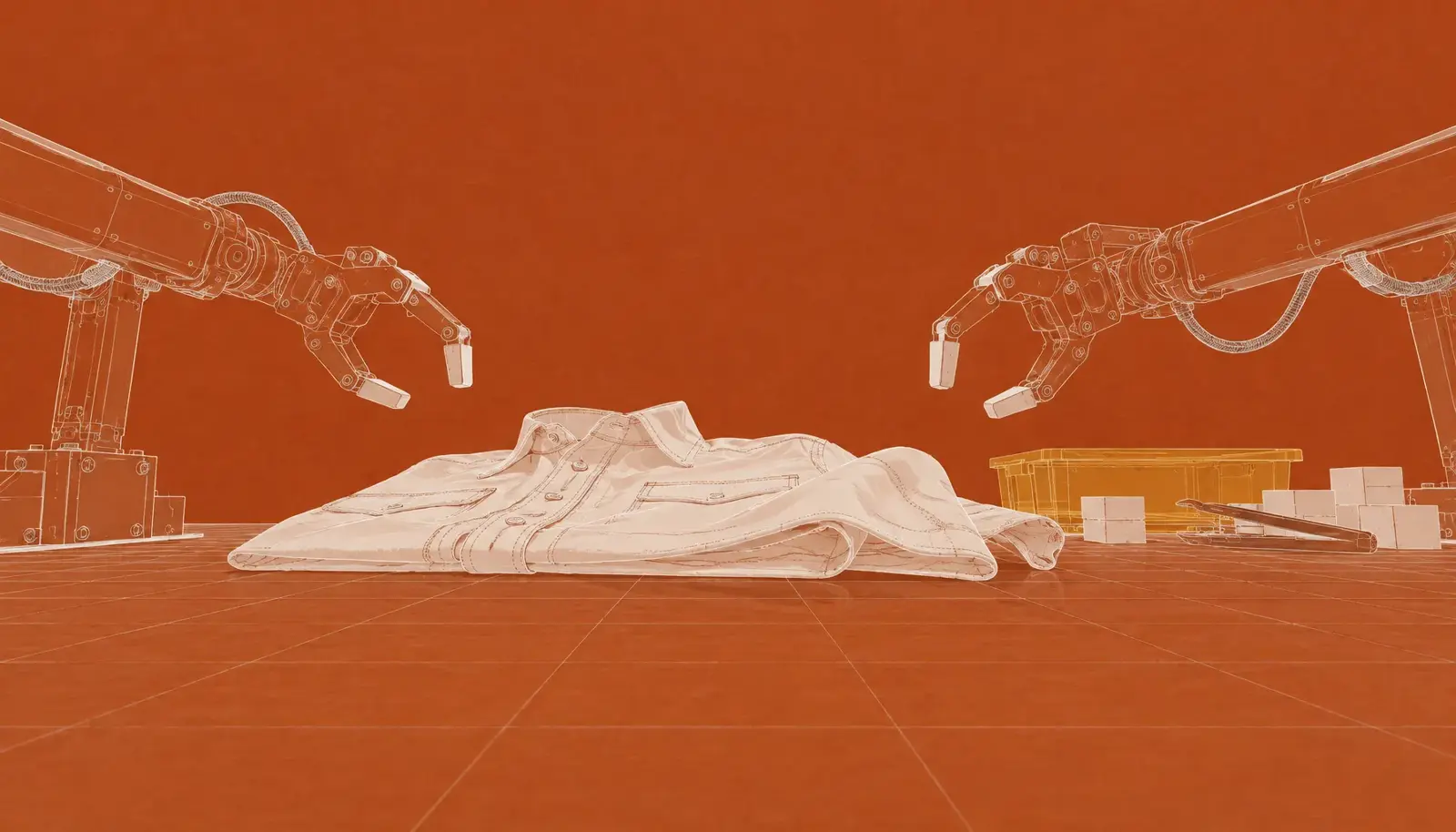
“The models could often turn an instruction into a useful plan and choose plausible spatial targets zero shot. They struggled when success depended on precise contact, tool mechanics, or a deformable object.”
XDOF Team
Ember-0 tests plans against physical contact
On October 23, XDOF published results from Ember-0, a 16-task benchmark that put five frontier models in control of real bimanual robot stations. The tests asked whether general-purpose multimodal models could move beyond describing a scene and carry out tasks with two arms, grippers and ordinary objects. The models often identified sensible goals and action sequences, XDOF reports, but their plans did not reliably translate into successful manipulation.
The study examines a different capability profile from that of vision-language-action models trained specifically for robot control. The tested language models showed strength in planning and spatial reasoning, while struggling with dexterity, tool use and coordinating both arms, XDOF says. The results come from a particular benchmark and setup; they do not establish how every frontier model performs across other robots or tasks.
Six stations ran 16 tasks in parallel
XDOF conducted the evaluation on six bimanual YAM stations. Each station had two six-degree-of-freedom arms with grippers, a camera on each wrist and an overhead camera; the arms stood 0.61 metres apart. Episodes could run for up to 30 minutes, and the fleet allowed XDOF to run 30 trials for each of the 16 tasks within a day.
The tasks covered more than simple pick-and-place. They included retrieving a plush toy by pulling in the towel beneath it, picking up bread with tongs, unfolding a T-shirt, serving cereal on a tray, tying a knot and arranging tableware. XDOF tracked observable subtasks and mistakes such as misgrasps, drops and collisions, separating partial progress from a completed task.
The five models were Astra, Sol 6.1, Opus 5.5, Fable 5.1 and Muse Wonder 1, each run at high reasoning effort. XDOF averaged success rates across the 16 tasks with equal weight for each task, excluding operator-invalidated trials and evaluation-stack failures. The models took between 12.5 and 24 seconds between action chunks, the company says, leaving the robot waiting for another decision.
False finishes and failed grasps expose the gap
A model’s own declaration that it had finished was an unreliable measure of success: XDOF found that tasks marked “done” were actually complete 57% of the time. The figure ranged from 38.2% for Fable 5.1 to 78.8% for Sol 6.1. The most common recorded failure was a misgrasp, XDOF also reports.
Fine manipulation was especially difficult because the tested setup lacked touch or force sensing. Models sometimes used a small test lift to check whether they had secured an object, but that recovery took more decisions and time. XDOF measured median average model-call times of roughly 13 seconds for Sol, 15 seconds for Astra and Opus, 23 seconds for Fable and 24 seconds for Muse.
Deformable objects exposed a sharper limit: none of 143 usable T-shirt trials succeeded. The models could infer that the shirt needed unfolding, but controlling its corners as the fabric shifted proved harder. For a task requiring a specific tool interaction, Sol succeeded at picking up bread with tongs in 13% of trials; nearly half of the episodes picked up the tongs at the wrong end.
Planning did not guarantee control
The contrast between tasks helps explain the scores. Sol achieved 83% success on retrieving the out-of-reach plush, a task that rewards a clear physical insight—pull the towel closer, then pick up the toy—followed by two ordinary grasps. The towel was pulled in during 73% of episodes, XDOF says. By comparison, the tongs task required the gripper to hold the tool correctly and close it on the bread, a contact-dependent action the robot could not confirm by touch.
XDOF also found that Astra and Sol had similar overall performance, while Astra cost more than five times as much per task. The evaluation therefore points to two distinct constraints: models need better physical control, and their slow decision cycles make errors expensive in time. In the benchmark’s most direct test of fabric handling, the recorded outcome was zero successful T-shirt unfolds across 143 usable trials.
Sources
- Original source · Blog post XDOF xdof.ai
Related stories
- UniFlowWAM Adds 3D Scene Flow to Robot Policies
- Ropedia’s DONIC Tracks Two Robot Hands With One Policy
- ForagerSim Tests Whether Robot Policies Can Build Useful Maps
- Rhoda AI Reports Higher Robot Benchmark Scores With Larger Video Models
- RoboColosseum Tests Robot Policies in 5,699 Comparisons at 124 Sites