The Floor
xFORM preprint reports faster LiDAR odometry through factor compression
Carnegie Mellon researchers report that xFORM compresses LiDAR scan-matching factors to 34 scalar residuals per scan pair. In dataset tests, its CPU and GPU variants reduced processing time compared with the earlier FORM system.
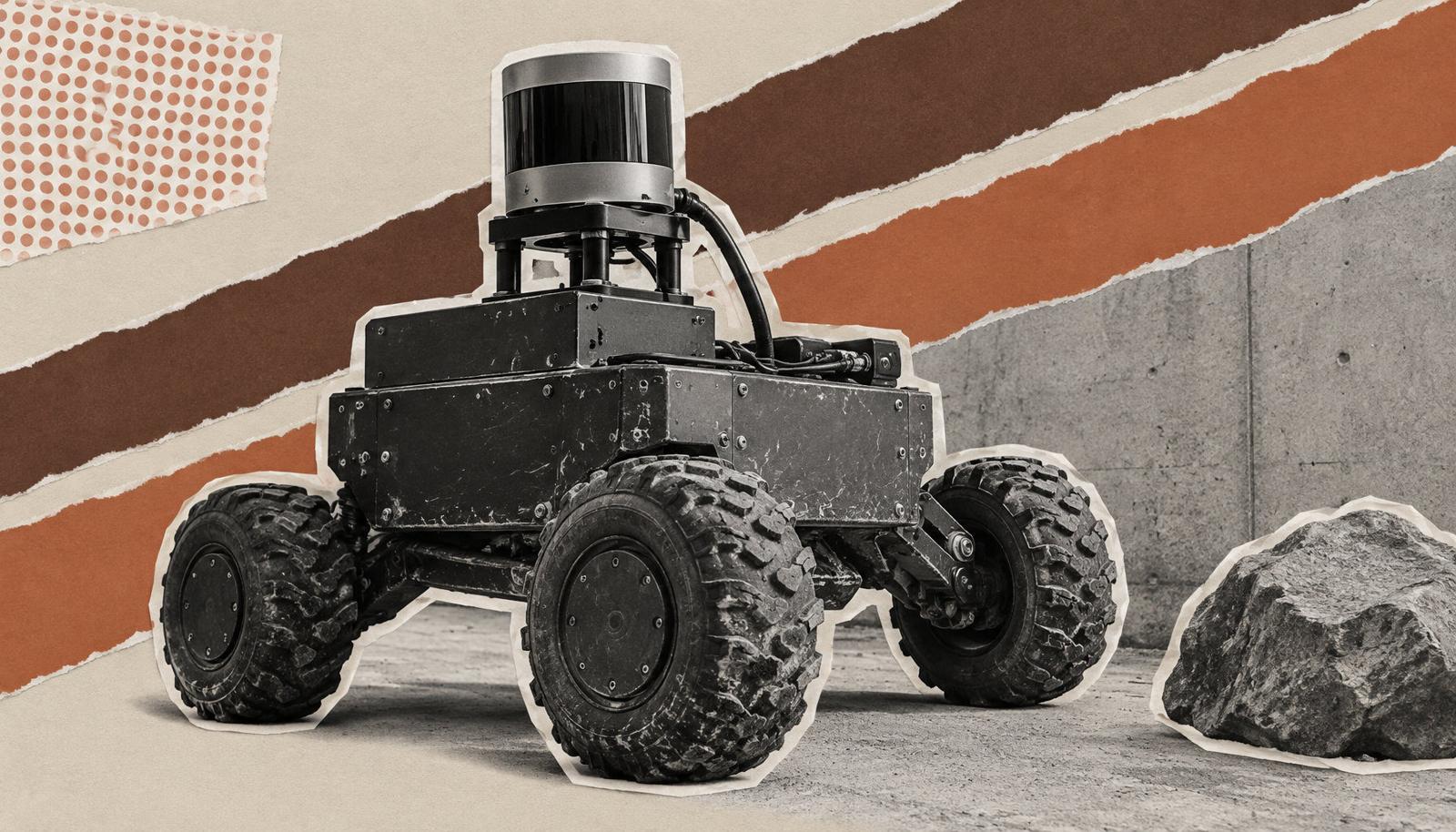
A new LiDAR odometry method compresses scan-matching factors to 34 scalar residuals per scan pair, even when the underlying optimization involves hundreds of thousands of feature matches. The approach, called xFORM, is described in an arXiv preprint by Carnegie Mellon University Robotics Institute researchers Ruogu Li, Easton R. Potokar and Michael Kaess.
In tests across 15 complete sequences from three datasets, the authors report speedups of 1.1–1.4 times for a CPU version and 2.0–4.0 times for a GPU version over their earlier FORM system, with no numerically significant differences from the original implementation. The comparison used five complete sequences per dataset and ran each configuration twice.
Compressing scan matches
FORM jointly estimates a window of recent scan poses and older scans that still have enough matches to remain in the optimization. Its processing includes selecting geometric features, finding corresponding features in earlier scans or a local map, and optimizing poses to reduce alignment errors.
Across the evaluated sequences, FORM extracted an average of 5,000–18,800 feature points per scan, producing a final optimization with an average of 53,000–268,000 matches connecting 22–44 poses, the paper reports. Those matches are used repeatedly as the system evaluates errors and their derivatives during optimization.
xFORM groups fixed match data for each scan pair into compact matrices called factor summaries. The compressed representation has 21 scalar residuals for point-to-point matches and 13 for point-to-plane matches; an absent match type contributes no residuals.
The authors say the construction preserves the original squared residual norm, gradient and Gauss-Newton matrix in exact arithmetic. A summary can be reused as poses change and must be rebuilt when its matches change.
The preservation guarantees assume fixed matches and FORM’s common isotropic weight per scan-pair factor. The paper says pose-dependent robust weights or anisotropic noise would require a different construction.
CPU and GPU implementations
The CPU variant parallelizes planar-feature selection across scanlines and computes scan-pair contributions in parallel. The GPU variant also uses the GPU for feature processing, correspondence search and construction of the summaries, which it returns to the CPU for optimization.
Both variants retain FORM’s feature-selection rules, registration objective and optimization schedule. In the evaluated windows, the iterative pose system was assembled and solved on the CPU in both variants.
What the tests found
The evaluation used an AMD Ryzen 9 5900X with 12 worker threads and an NVIDIA GeForce RTX 5090. The datasets were Newer College 2021, Hilti 2022 and Multi-Campus.
The timing included the complete estimator, GPU transfers and synchronization, but excluded input loading, output serialization and the first 20 scans. Dataset means weighted sequences and repeats equally.
On Newer College 2021, mean processing time was 112.20 milliseconds per scan for FORM, 90.75 milliseconds for xFORM-CPU and 30.85 milliseconds for xFORM-GPU, according to the results. On Hilti 2022, the corresponding means were 56.86, 43.59 and 25.32 milliseconds; on Multi-Campus, they were 71.27, 59.79 and 23.46 milliseconds.
Across all scans in the main comparison, the authors report that both variants’ poses agreed with FORM within 1.2 × 10⁻⁸ meters in position and 3.4 × 10⁻¹¹ radians in rotation. The maxima compare poses at identical timestamps against FORM from the same repeat, without trajectory alignment.
A separate ablation measured the contributions of the changes on three individual complete sequences. Each configuration ran once per sequence, separately from the main comparison, under the same settings and timing protocol.
Sources
- Original source · Preprint xFORM: Accelerating Fixed-Lag LiDAR Odometry with Exact Factor Compression arXiv:2611.34053
Related stories
- Northwestern preprint proposes four-factor robot risk filter
- RoboSense reports 210.1% rise in quarterly LiDAR sales
- CMU’s Team Chiron Competes in DARPA Triage Challenge Finals
- Researchers test LiDAR reconstruction method built from planar patches
- MOLA opens free cloud service for LiDAR mapping from ROS bags