The Floor
ACE-CaP-0 preprint reports 92.1% success in robot trials
An arXiv preprint reports 221 successful runs in 240 trials across eight real-world manipulation tasks. Its fixed programs averaged between 0.97 and 2.27 minutes of physical execution time across those tasks.
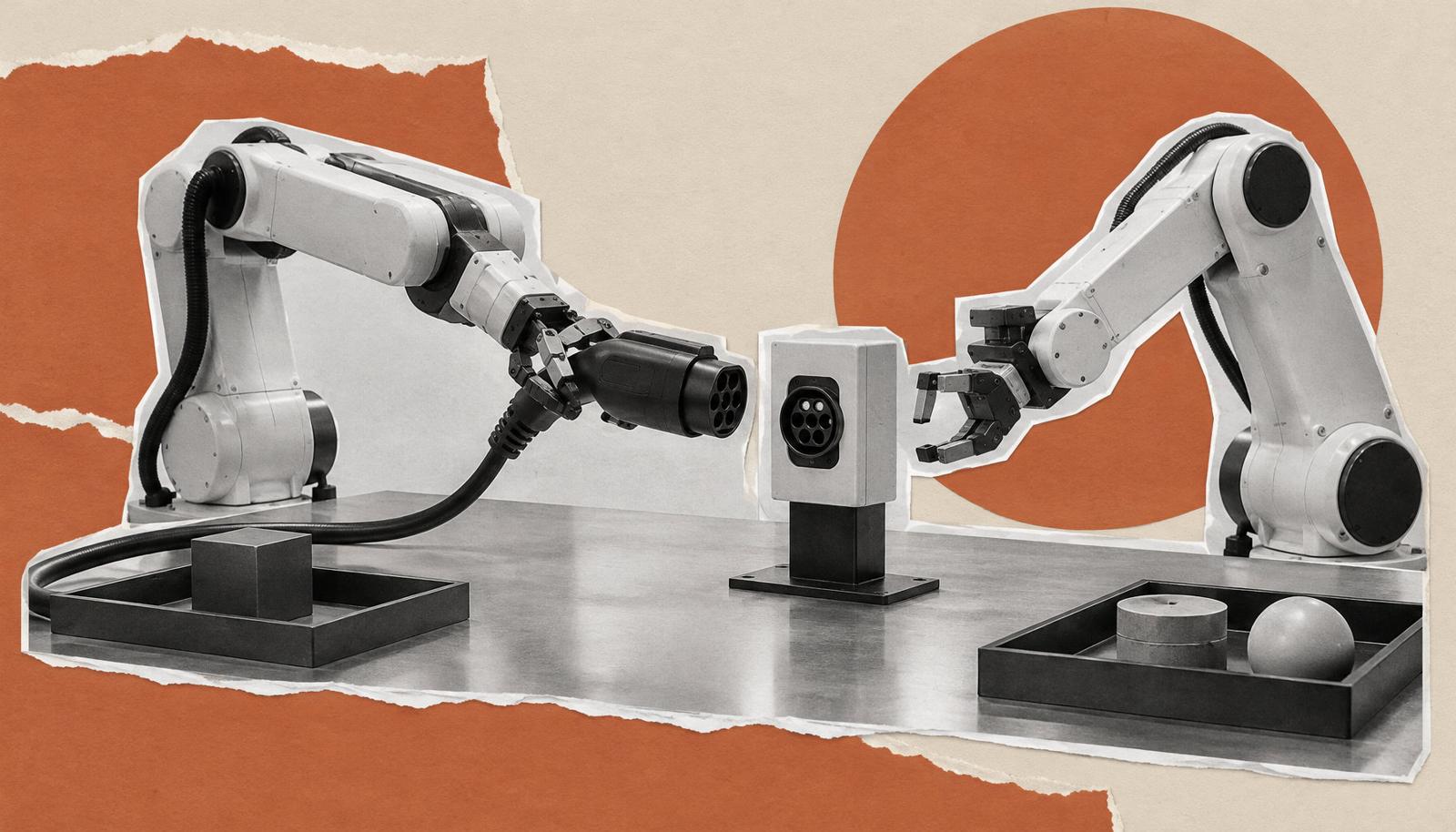
An arXiv preprint dated November 12, 2026, reports that ACE-CaP-0’s fixed robot programs succeeded in 221 of 240 real-world trials, for an overall success rate of 92.1%. The evaluation covered eight manipulation tasks, and mean physical execution times ranged from 0.97 to 2.27 minutes, according to the paper.
Building reusable robot programs
The approach combines code-based robot policies with a process for gathering experience while developing them. The coding agent can revise a program, test it on a robot, request a robot demonstration or use simulation to examine a particular question. Once development ends, the program is frozen for evaluation; runtime perception and control remain active during its runs.
The researchers describe demonstrations as kinesthetic: a person physically guides the robot arms through a task, while the system records video, arm trajectories and key joint poses. The agent can request this information when it judges that an example would help with a manipulation decision. Simulation is also available on demand, rather than being required for every development step.
Eight tasks on physical hardware
The evaluation used two Agilex PIPERX robot arms and three Orbbec DaBai DC1 cameras: one top-down camera and two mounted on the wrists. Tasks included inserting a charger plug into a socket, removing a bottle cap while stabilizing the bottle, nesting cups, inserting flower stems into a vase, reorienting a parcel and packing shoes into a box.
For policy development, the authors used Claude Opus 5.5 as the coding agent. Development allowed at most ten human-assisted scene resets per task, with resets used to collect demonstrations excluded from that limit. Each task’s frozen program then ran in 30 evaluation trials without further updates, for 240 trials altogether.
Results and limits
Seven of the eight tasks reached success rates of at least 90%, the preprint reports. Charger insertion succeeded in all 30 trials; chicken plating succeeded in 29 of 30, while bread packing succeeded in 25 of 30, or 83.3%. Parcel reorientation had the shortest mean execution time, 0.97 minutes, and shoe packing the longest, 2.27 minutes.
The paper also reports a separate charger-insertion comparison during policy development. In that experiment, the simulation-on-demand condition reached 100% success in its final real-world trials, compared with 86.7% for the real-only condition; development time was 2.6 hours and 3.7 hours, respectively. The paper describes one independent development run per condition, so these figures come from that comparison rather than repeated development runs.
The authors say the final programs used runtime perception and control but ran without a human or coding agent in the loop. That describes execution of the frozen policies; the coding agent and, when requested, human demonstrations were part of the earlier policy-development process.
Sources
- Original source · Preprint ACE-CaP-0: Real-World Code-as-Policies in the Era of Experience arXiv:2611.16872
Related stories
- VICTR Preprint Reports 23.8% Success on Unseen Out-of-Domain Real-World Robot Tasks
- Preprint proposes a flow model for broader robot IK
- UniLatent preprint tests robot-to-robot transfer in simulation and on arms
- Preprint uses scooping forces to estimate granular properties
- ExRL learns when to replan robot actions, researchers report