The Floor
LG Innotek Shows NVIDIA-Linked Robot Sensors at GTC Berlin
LG Innotek displayed a 3-megapixel camera module and a multimodal vision system using NVIDIA Holoscan Sensor Bridge technology at GTC Berlin. The companies plan to extend their work to humanoid robot vision and robotic hands, with further solutions slated for next year's CES and GTC.
“Our collaboration with NVIDIA is further recognition of LG Innotek's technological competitiveness.”
Moon Hyuksoo, CEO, LG Innotek
LG Innotek showed a 3-megapixel camera module and a multimodal vision system built around NVIDIA’s Holoscan Sensor Bridge technology at GTC Berlin on October 20. The company announced the display on October 22, describing the hardware as part of a joint effort to develop sensing solutions for physical AI and robotics. The planned work extends beyond cameras to humanoid robot vision and robotic hands.
HSB moves sensor data toward the AI computer
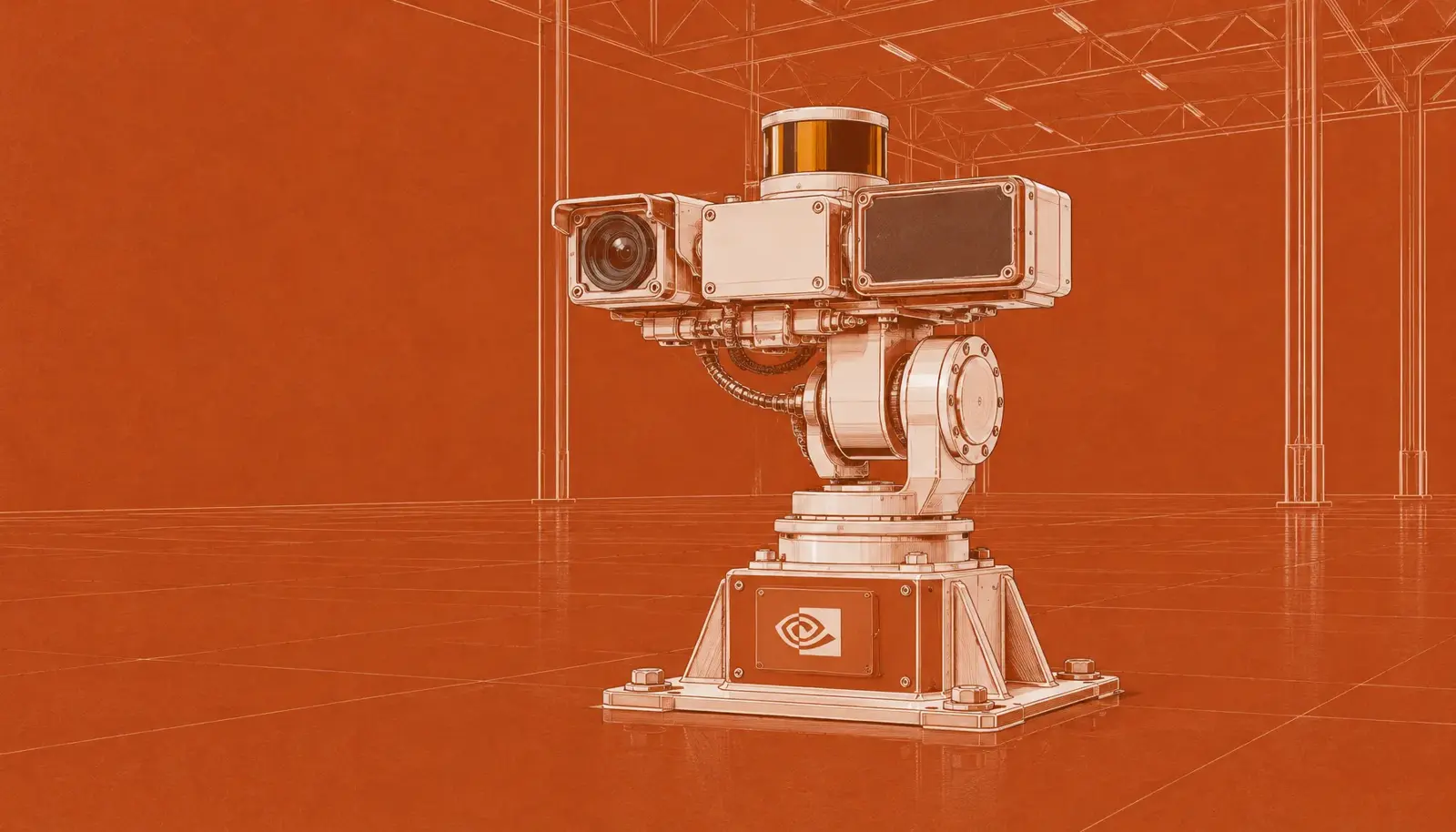
The camera module and Multi-modal Vision System, or MVS, are designed to use NVIDIA’s Holoscan Sensor Bridge (HSB). LG Innotek describes HSB as a way to send sensor information directly to an AI computer rather than routing it through a CPU. NVIDIA’s English-language description identifies HSB as an open-source, Ethernet-connected sensor fabric.
The MVS combines cameras with other sensors, including lidar and radar, to build a broader view of the surrounding environment. That combination matters for robots that need to interpret visual information alongside depth or distance measurements. LG Innotek says the HSB-based setup is intended to let physical AI systems process information and make decisions more quickly, but its announcement gives no latency, throughput or recognition-accuracy figures.
LG Innotek plans humanoid sensing and robotic hands
The companies plan to expand their work into vision sensing for humanoid robots and sensing solutions for robotic hands. LG Innotek says it will develop systems compatible with NVIDIA’s next-generation platform and show further solutions at CES and GTC next year. The announcement does not identify a specific robot, customer, product launch date or commercial supply agreement for these HSB-based systems.
That distinction leaves the GTC Berlin display as a technology demonstration and a statement of intended cooperation, rather than evidence of a deployed NVIDIA-linked product. The company also does not disclose pricing, production volumes or performance benchmarks for the modules shown. Its stated next public milestone is a planned presentation at next year’s CES and GTC.
Robot components add to LG Innotek’s existing work
LG Innotek is also developing robot components with Boston Dynamics, according to the company’s announcement. It says it began mass production in July of camera modules for North American robotics customers, though it does not name those customers or specify the modules’ applications. The new NVIDIA work therefore sits alongside existing camera development, while broadening the company’s stated focus to integrated sensing and hand-related applications.
The company’s pitch rests on combining optical design with cameras, lidar and radar, then connecting those sensors to NVIDIA’s computing platform. Whether that approach translates into a product advantage will depend on implementation details the announcement leaves open, including sensor configuration, data rates and system-level results. For now, LG Innotek has named the components on display, the data path they are meant to support and two events where it intends to show what comes next.
Sources
- Original source LG Innotek lginnotek.com
Other pages read
- PR Newswire (LG Innotek press release) prnewswire.co.uk
Related stories
- NVIDIA Opens Flora, a Three-Model Pipeline for Robot Video
- 12× Faster Robot-Planning Decoding With VFlash on Jetson Thor, NVIDIA Research Reports
- Berkeley and NVIDIA pair robot coding agents with a new benchmark
- Holoscan 5 ran a robot-arm loop at 400 Hz
- NVIDIA details SOMA tool for mapping human motion to humanoids