The Floor
POSTECH team uses drone flight to calibrate outdoor 3D tracking
A drone’s flight path provides a moving reference for calibrating cameras across outdoor spaces. POSTECH’s November 17 research notice describes tests and demonstrations spanning drone tracking, airflow tracers and basketball.
A drone as a calibration reference
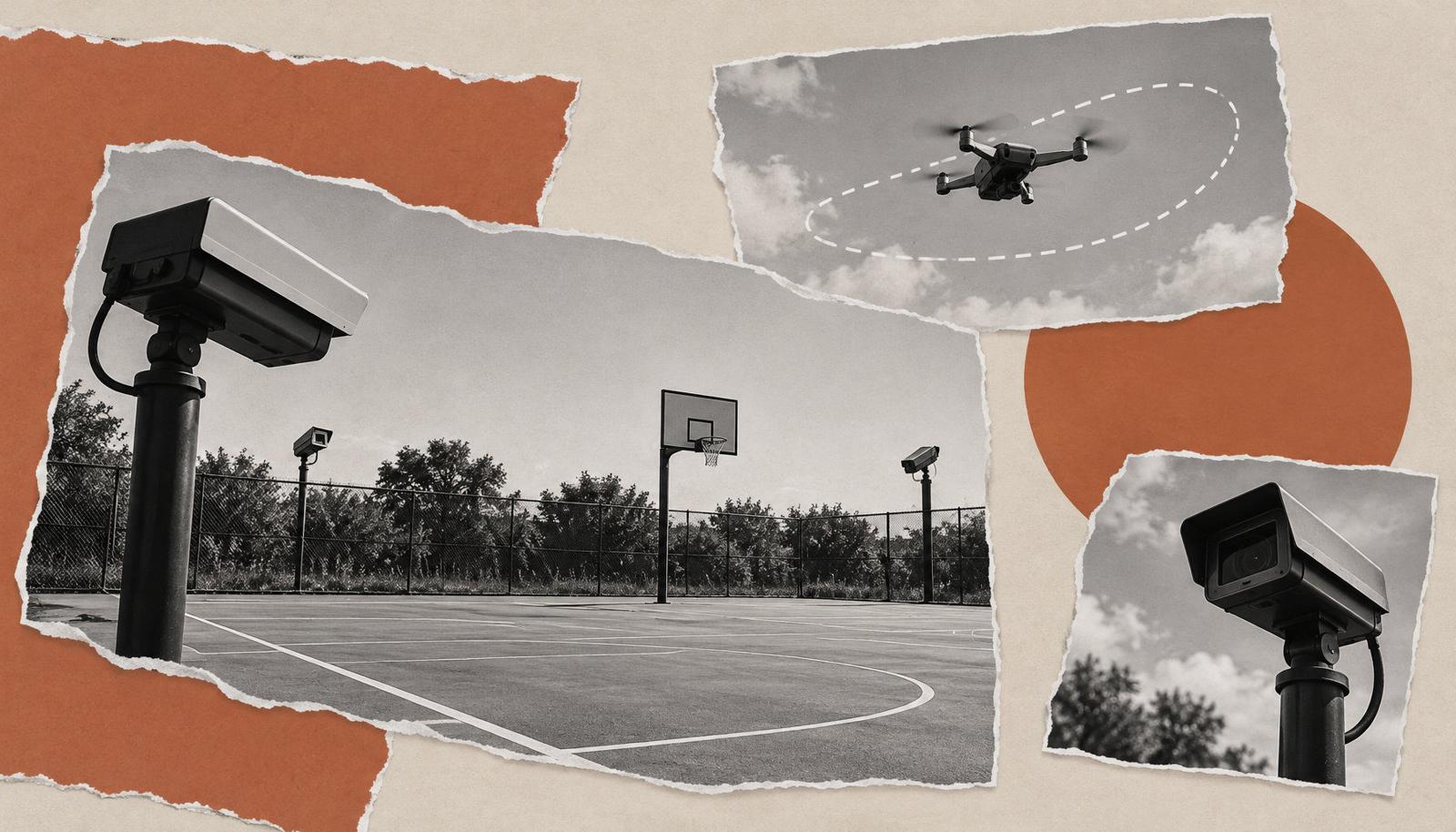
A drone’s flight path can calibrate multiple cameras for outdoor 3D tracking without bulky calibration equipment, according to POSTECH, which highlighted the work on November 17. The method, called drone-assisted multicamera 3D tracking (DAM3T), was published online in Science Advances. It uses a freely flying drone as a moving reference: cameras placed at various locations film it at the same time, and an algorithm compares the drone’s changing position in each view to calculate the cameras’ positions and orientations, with no manual alignment.
Adding data from the drone’s RTK-GPS positioning system lets the team map the camera-measured motion onto real-world coordinates of latitude, longitude and altitude. The research team was led by Professor Jin-Tae Kim and master’s student Jungyeon Kim of POSTECH’s Department of Mechanical Engineering.
Indoor and outdoor tests
In a comparison with an indoor motion-capture system in a 6 m by 6 m by 3 m space, POSTECH reports an error of about 2.3 cm, a normalized error of 1.15%. In outdoor experiments spanning tens of meters, the error was 1.21%, and errors stayed below 2% both indoors and outdoors.
Demonstrations and plans
The team also tracked multiple irregularly flying drones, visualized wind flow with LED-illuminated helium balloons, and, during an outdoor basketball game, reconstructed the players’ movements and the 3D parabolic paths of the ball during passes and shots.
Professor Kim said the team plans to apply the technology to settings where precise measurement has been difficult, including atmospheric flow monitoring, precision tracking of unmanned aerial vehicles, autonomous control of multiple drones and sports game analysis. POSTECH’s account of the study is the source for this report; the Science Advances paper itself was not available to read.
Sources
- Original source · Paper Science Advances dx.doi.org
Other pages read
- POSTECH postech.ac.kr