The Floor
Wheelchair planning system avoids pedestrians in lab tests, paper says
Researchers tested two path-planning methods on a powered wheelchair and reported no pedestrian collisions in laboratory experiments. Simulations showed different collision patterns when the wheelchair’s dimensions were included.
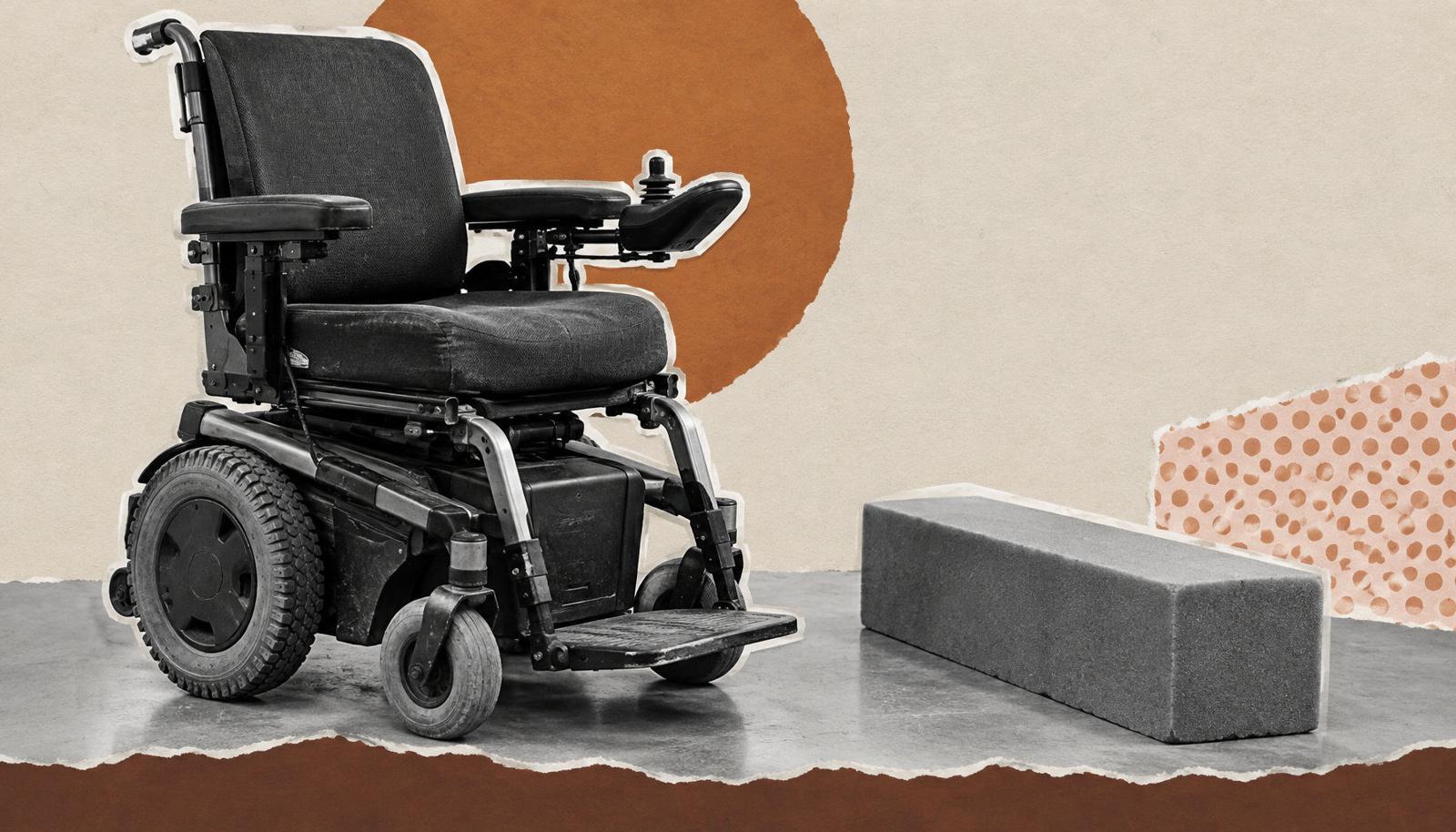
Two path-planning methods guided a powered wheelchair through laboratory tests without collisions with pedestrians, according to a preprint by Northeastern University researchers submitted on November 20. The work extends an earlier simulation-based framework to a physical wheelchair and adds a model that accounts for the chair’s dimensions.
Source arxiv.org
The preprint was submitted to arXiv and is under review at the International Journal of Social Robotics. Its authors are Damla Leblebicioğlu, Ege Özgül and Taşkın Padır.
Tests with pedestrians
The researchers used a Quickie 500M powered wheelchair equipped with the LUCI mobility system. They operated it in autonomous remote mode with the LUCI safety layer disabled, so the proposed algorithms handled obstacle avoidance.
In a motion-capture area, reflective markers on the chair and participants provided position and orientation measurements. In a separate open area, onboard LiDAR provided wheelchair localization, while front-mounted RGB-D cameras detected and tracked pedestrians.
Each test set involved four pedestrians. In one scenario, participants walked back and forth along perpendicular paths; in another, two moved randomly while the others tried to block the chair near waypoints and obstacle corners.
Both planners traveled nearly identical total distances in the hardware experiments, the authors report. In the hardware experiments, reverse motion was disabled: when a reference point lay behind the chair, it rotated before moving forward.
From route order to local movement
The framework combines a global planner that orders destinations using the Traveling Salesman Problem with potential-field guidance and a local planner. The local planner uses either a Rapidly-exploring Random Tree, or RRT, or an A-star search to plan around obstacles.
The global route is recalculated every 10 seconds from the chair’s current position through the remaining waypoints. Potential-field forces guide the chair toward its route and away from obstacles; additional forces pull it back toward the global path and guide it along that path after a deviation.
The updated A-star planner uses an extended neighborhood and direction-dependent movement costs. The RRT version uses environment-informed sampling and a two-step tree-extension strategy.
Simulation results and limits
The researchers compared the methods in Monte Carlo simulations using both a point representation of the wheelchair and an elliptical model that accounts for its dimensions. Normal and crowded scenarios contained 16 and 24 dynamic obstacles, respectively, with six static rectangular obstacles in each; each model and scenario combination had ten simulations.
The simulation used a fixed time step independent of the planners’ computation time. In the crowded elliptical-model scenario, the RRT-based method averaged 17.0 collisions and 400.0 m traveled, compared with 25.3 collisions and 392.0 m for the A-star method.
The collision counts are not counts of separate encounters: the paper says contact lasting several time steps was counted multiple times. With the point model, RRT had no collisions in the normal and crowded trials, while A-star averaged 6.1 and 18.4, respectively.
The authors describe the simulated pedestrian movements as random and adversarial, with pedestrians deliberately approaching and cornering the wheelchair. They also note that hardware tests took place in a laboratory rather than an assistive-living facility, included only pedestrians as dynamic obstacles and had a limited number of trials.
Sources
- Original source · Preprint A Hybrid Multi-Goal Path Planning Framework for Powered Wheelchairs in Dynamic Environments: From Simulation to Real-World Validation arXiv:2611.28394
Related stories
- Unitree Go2 Study Finds Assistive Robot Explanations Need Restraint
- Turn-Aware Planner Solves Tested 1,000-Agent Warehouse Cases
- Amazon researchers report faster planning for 1,125 robots
- LoKiTO preprint reports UAV planning results with neural distance fields
- ROS 2 simulation study reports faster, repeatable tests