The Floor
HIT team says robot dog completed 10-minute high-heat fire test
A protected robot dog completed a 10-minute exposure test in an open fire at 1,000°C, its developers say. The team also tested remote control and reconnaissance functions using simulated targets.
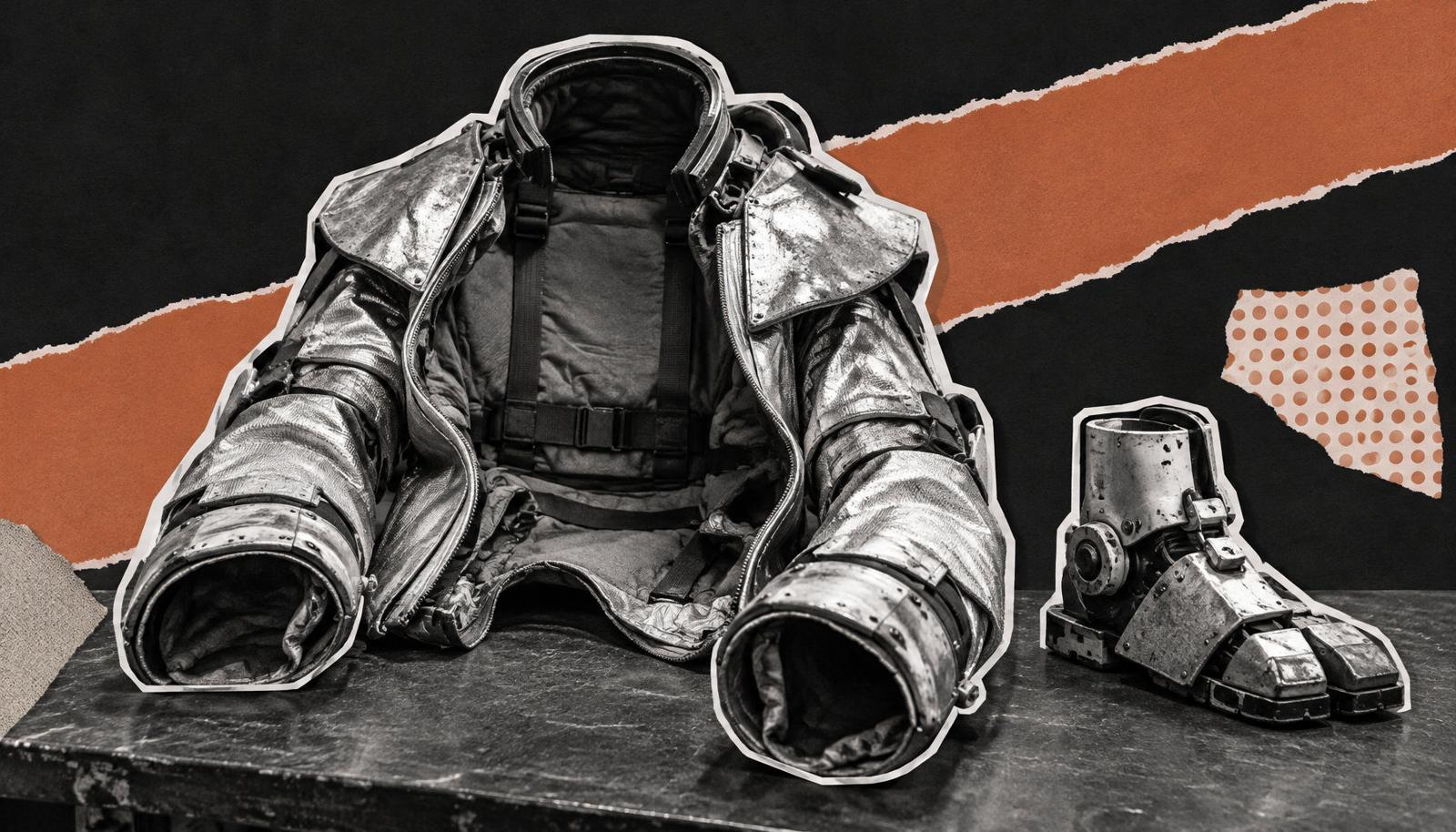
A fire-reconnaissance robot dog wearing heat protection completed a 10-minute exposure test in an open fire at 1,000°C, according to its developers at Harbin Institute of Technology’s Suzhou research institute. The robot was unveiled and tested on November 25.
Its developers are the institute’s autonomous unmanned systems and intelligent equipment team and Sichuan Longjia Aerospace Materials Technology, a company incubated by the university. The robot is intended to enter hazardous fire areas before firefighters to locate fires and search for people.
Testing in fire and a training building
The trial included high-rise reconnaissance and an open-fire experiment using gasoline. The institute said specialist fire-testing personnel controlled the fire, while the team recorded component temperatures and control status and checked whether the robot could follow movement commands during heating and after withdrawal.
The tests used training heat sources and simulated targets to evaluate stair climbing, reporting fire locations, searching for and identifying people, remote control and image transmission in a training tower or simulated building. Team members prepared for the test at the Fengyang Road special service station of the Suzhou Fire and Rescue Detachment.
Protection for key components
Sichuan Longjia was responsible for applying an aerospace thermal-protection approach to the four-legged robot. The institute said the protective layer can keep the highest temperature of key internal components at or below 80°C in a high-temperature environment.
It gave approximate temperatures of 50°C for the lithium battery and 70°C for the joint motors. The institute described the robot withdrawing steadily after the live test.
Seeing and communicating remotely
The team, led by associate researcher Guo Shuai, used laser-gated imaging for scene recognition. The institute said the technology can see through dense smoke and identify fire sources and trapped people in real time.
The robot also combines visible-light and infrared thermal imaging with AI recognition algorithms. It uses redundant remote image-transmission and 5G links with an adaptive bitrate mechanism; the institute said the system can support stable control and high-definition image transmission in buildings taller than 30 stories.
The team plans further work on coordination by individual or multiple groups of reconnaissance robots and aims to bring the equipment into routine firefighting operations. It also plans to extend the work to group reconnaissance in complex, high-risk environments.
Sources
- Original source Harbin Institute of Technology Suzhou Research Institute “苏州高等研究院” sri.hit.edu.cn
Related stories
- CoTAMP plans cooperative quadruped motions in simulation
- Preprint adapts a world action model for quadruped tasks
- ArXiv paper details quadruped control across four arm morphologies
- Eteverse Sends a Quadruped Into Seoul’s Collapsed-Building Drill
- Russia sends Teledroid robot toward space station for tests