The Floor
TacPilot paper reports 56.4% fewer tactile regions encoded
An arXiv paper describes TacPilot, a method that refreshes selected tactile-sensor regions and separately gates corrections to a visual manipulation policy. The authors report 56.4% fewer encoded regions in offline replay and 26 successes in 30 exploratory simulation trials.
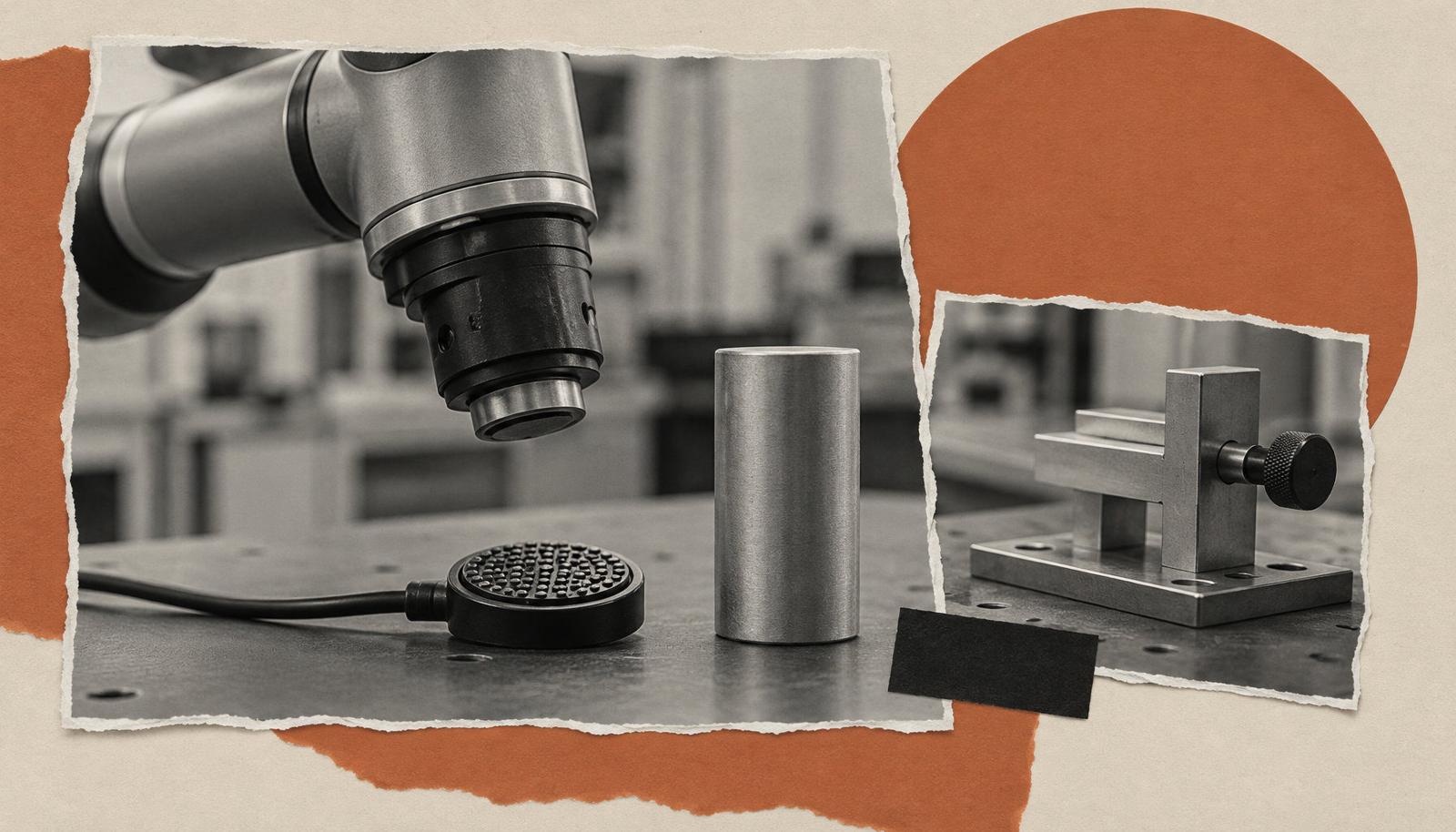
Two separate decisions for touch
A new robot-manipulation method reported in an arXiv preprint cuts the number of tactile regions encoded during offline replay while keeping the visual policy’s action predictions essentially unchanged. The authors of TacPilot report a 56.4% reduction in encoded regions compared with periodic full encoding, and 26 successful outcomes in 30 exploratory simulation trials.
Submitted on November 18, 2026, the paper describes TacPilot as a tactile residual framework built around a frozen visual policy. Rather than processing all tactile features in the same way at every step, the method uses one gate to decide when features should be refreshed and where to update them, and a separate gate to decide whether touch should alter the policy’s proposed action.
Refreshing only changed regions
The system’s tactile monitor looks for changes in sensor readings. When a region is triggered, the encoder updates affected features; unchanged regions can reuse cached features. A second component proposes bounded corrections in Cartesian and gripper commands, while independent pose and gripper gates determine which corrections are applied.
The authors tested feature reuse by replaying recorded expert trajectories offline. Under their Event/Local condition, the method encoded 206,975 regions in 9,290 encoder calls; the paper reports that this condition reduced encoded regions by 56.4% and encoding time by 37.3% from the Periodic/Full condition. Action mean-squared error stayed near 0.948 across the four refresh-and-reuse conditions, and maximum action differences were below 8×10⁻⁷.
Those figures come from offline comparisons, not a measurement of total robot task time. The analysis replayed 12 expert trajectories from seven internal model-selection starts, totaling 14,865 frames, without retraining or new rollouts. The authors describe the comparison as a measure of tactile computation and agreement with expert commands.
Simulation and physical tasks
For the simulation evaluation, the robot had to grasp a lying cylinder, stand it upright, release it, and withdraw while leaving the cylinder standing. TacPilot completed 26 of 30 trials, or 86.7%, across two cylinder sizes. The paper compares that result with 21 of 30 trials for a dense tactile residual baseline and 15 of 30 for a vision-only baseline.
The paper characterizes the simulation set as an exploratory development evaluation: it combines previously evaluated starts with additional seeded starts, and the authors note that the object-size range was restricted after earlier experiments. TacPilot recorded two safety stops and two timeouts in the trials; the dense tactile baseline recorded six safety stops and three timeouts, while the vision-only system recorded nine safety stops and six timeouts.
On hardware, the authors report qualitative validation using OpenArm v2 equipped with Paxini tactile sensors. The four tasks were cylinder uprighting, solid-peg insertion, hollow-tube insertion and key manipulation.
The paper also cautions that differences between systems limit attributing the simulation baseline results to gating alone. TacPilot’s training and release-memory behavior differed from those of the comparison systems.
Sources
- Original source · Preprint TacPilot: Does Touch Need to Be Everywhere? arXiv:2611.23804
Related stories
- CoRA-VTLA preprint adds tactile memory to robot manipulation
- 3DTouch preprint reports 42-point gain in manipulation success
- TacHOI reports lower object-tracking error using touch and video
- Preprint outlines Geo-Force limits for geometry-based force sensing
- LaST1.0 preprint reports stronger manipulation results in simulation and hardware tests